
Increase Your Cultural Competence

What does your classroom look like? Does it represent the students that you teach?
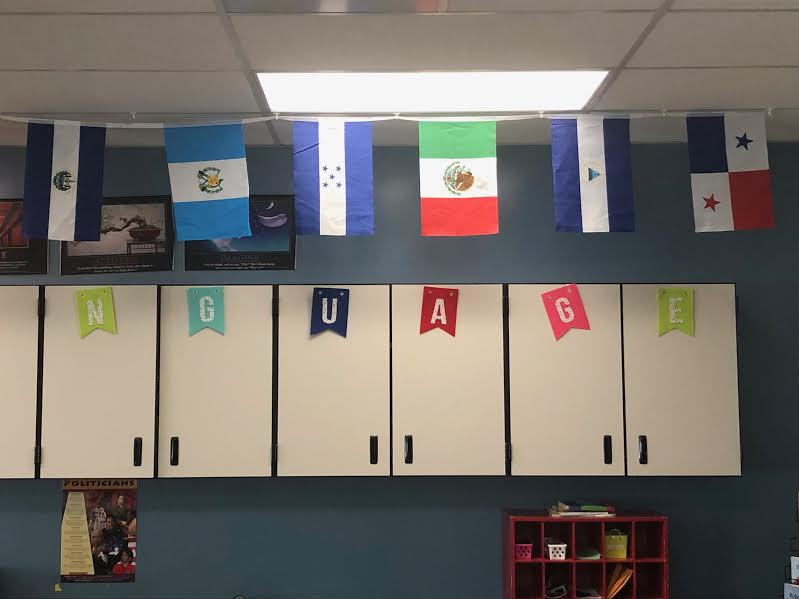
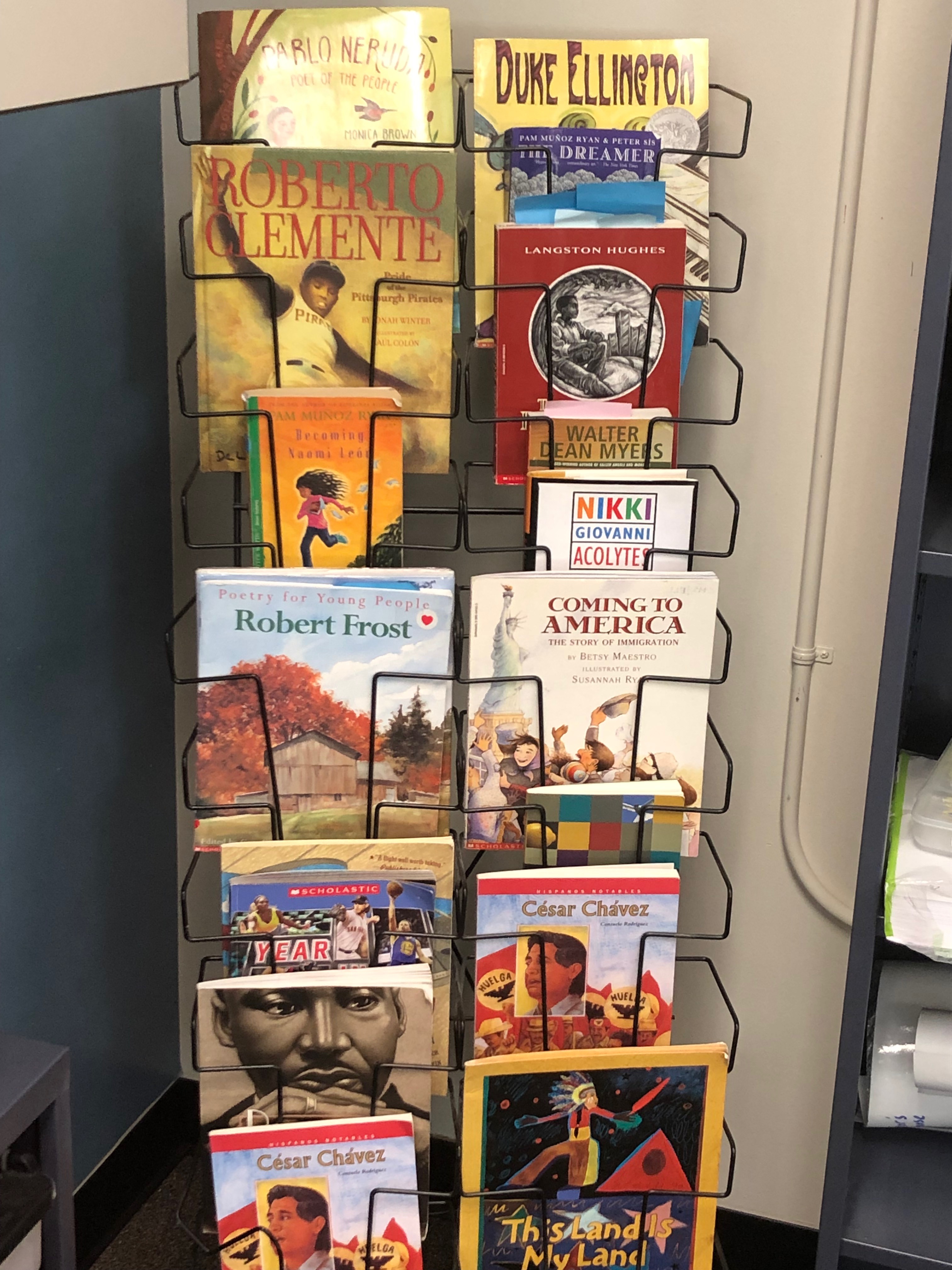
I knew the importance of students seeing themselves in what I taught, but I had never realized that my classroom environment needed an upgrade. I took a culturally responsive class and had an “aha” moment. First, I was shocked when the facilitator said that I was someone of color. I always knew that I had a permanent tan, but did not realize that until that moment. I grew up in Miami with people that were just like me. People born in the United States with immigrant parents. I asked my colleague, “Do you see me as someone of color?” She didn’t think so either. Now, I’m proud to be someone of color, born to Colombian parents that came to the United States for a better life. I quickly ordered flags representing where my students came from. In my case, flags from Latin America. I proudly hung them up and my students entered the room with excitement as they saw their country’s flag up in their classroom. (If you decide to do this, you must by a fire retardant spray as this is a fire hazard) I displayed my multi-cultural books throughout the classroom and soon my students were checking out the books that had previously been in the back of a bookshelf. All this was done to honor where they come from and to let them know that they have a plethora of information and experience to contribute to the classroom. Doing this contributes to students’ sense of belonging and wellbeing.
Increasing Students’ Sense of Belonging with Translanguaging in the Classroom
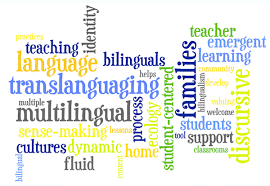
What is translanguaging? Translanguaging is a pedagogy that allows students to use the languages they know to process information to gain meaning and then the output is in English. Watch a short video on translanguaging:
Learn more about Translanguaging and using student’s linguistic repertoire with a Ted Talk by Ofelia Garcia who is a key proponent in translanguaging.
Youtube video showcasing Grace De La Sala honoring students’ home language and making cross connections between English and Spanish to learn how to write topic sentence, textual evidence and commentary. Dictado in action for a 7th grade class with reference to the novel, “Tangerine” by Edward Bloor. Allowing students to use their home language to make meaning of new concepts is important in the classroom.
Strategies in Getting Equity in Students’ Voices
Link to different types of activators: https://engagingschools.org/store/documents/Activators%20What%20Are%20They.pdf
#1 Popsicle Sticks : When setting up your classroom, write each student’s name on a popsicle stick. Have students quickly jot down responses to questions and then they can speak with an elbow partner. Once you select a popsicle stick, the student can respond with their partner’s answer or their own. Using this strategy, allows for 100% participation. I have 5 classes, so I have a different color for each class. This helps when popsicles fall on the floor. Periodically, double check that all the student’s names are still in the popsicle holder(I use a cup). Some popsicle sticks mysteriously disappear.
#2 Activators: There are many activators out there, but the ones I use most often are “The Wave” and “Image Cards”. These activators are engagement strategies to make sure each student’s ideas are shared in the classroom. Processing time is very important for students, especially ones that are learning a new language. I always have sentence starters to help students begin writing their responses. When implementing “The Wave”, you let students know in which order they will be speaking. This is a quick process to allow each student to answer the question.
Image Cards allow students to create metaphors on the unit of study or topic in the classroom. Have image cards laminated and cut up so you can reuse them each year. I have them in a sturdy envelope near the front of the classroom. My whole 7th grade unit is about “Choices” and we have been working on the introduction to a literary analysis essay. An example prompt would be to compare an introduction to an image card. An introduction to a literary analysis essay is like a ______because______. A sample answer would be: An introduction to a literary analysis essay is like a compass because it guides your paper. Here is a link to image cards: https://engagingschools.org/wp-content/uploads/2014/08/Engaging_Schools_Activators_Image_Cards.pdf
References
Centers for Disease Control and Prevention. (2018). Health and academics. Retrieved from
https://www.cdc.gov/healthyyouth/health_and_academics/index.htm
Corcoran, S. P., Elbel, B., & Schwartz, A. E. (2016). The effect of breakfast in the classroom on
obesity and academic performance: Evidence from New York City. Journal Of Policy
Analysis & Management, 35(3), 509-532. doi:10.1002/pam.21909
Dearing, E., Walsh, M. E., Sibley, E., Lee-St John, T., Foley, C., & Raczek, A. E. (2016). Can
community and school-based supports improve the achievement of first-generation
immigrant children attending high-poverty schools? Child Development, 87(3),
883–897. https://doi.org/10.1111/cdev.12507
Diaz, J. M., Warner, L. A., & Webb, S. T. (2018). Outcome framework for school garden
program development and Evaluation: A Delphi Approach. Journal of Agricultural
Education, 59(2), 143–165. https://doi.org/10.5032/jae.2018.02143
Duncan, D. W., Collins, A., Fuhrman, N. E., Knauft, D. A., & Berle, D. C. (2016). The impacts
of a school garden program on urban middle school youth. Journal of Agricultural
Education, 57(4), 174.
Elinder, L. S., Patterson, E., Nyberg, G., & Norman, Å. (2018). A healthy school start plus for
prevention of childhood overweight and obesity in disadvantaged areas through parental
support in the school setting – study protocol for a parallel group cluster randomised trial.
BMC Public Health, 18(1), 1. doi:10.1186/s12889-018-5354-4
Gilbert, L. R., Brown, C. S., & Mistry, R. S. . (2017). Latino immigrant parents’ financial stress,
depression, and academic involvement predicting child academic success. Psychology in
the Schools, 54(9), 1202–1215. https://doi.org/10.1002/pits.22067
González, J. J., Kula, S. M., González, V. V., & Paik, S. J. (2017). Context of Latino students’
family separation during and after immigration: Perspectives, challenges, and
opportunities for collaborative efforts. School Community Journal, 27(2), 211–228.
McCarter, S. (2017). The school-to-prison pipeline: A primer for social workers. Social Work,
62(1), 53–61. https://doi.org/10.1093/sw/sww078
Peters, S. C., & Woolley, M. E. (2015). Testing a model of environmental risk and protective
factors to predict middle and high school students’ academic success. Children &
Schools, 37(3), 135–143. https://doi.org/cs/cdv014
 Grace De La Sala's Health and Wellness Blog